
Another weekend, another round of devastating losses? You’re not alone. So many sports bettors fall into common traps, turning what should be a fun and potentially profitable hobby into a frustrating money pit. I’ve been there, seen it, and helped countless others turn their betting fortunes around.
The good news is, you can improve your results. It’s not about magic systems or guaranteed wins, but about understanding and avoiding common mistakes that plague even seasoned bettors. By the end of this, you’ll be equipped to make smarter decisions and keep more money in your pocket.
Ready to transform your weekend betting? Here are 5 critical sports betting mistakes you need to avoid:
- Chasing Losses: Desperation leads to bad bets. We’ll show you how to resist the urge to “win it all back” immediately.
- Ignoring Bankroll Management: Betting too much (or too little) per game can be disastrous. Learn the golden rules of managing your funds.
- Betting with Your Heart, Not Your Head: Passion for your favorite team can cloud your judgment. We’ll help you separate fandom from smart betting.
- Lack of Research: Blindly betting based on gut feeling? You’re throwing money away. Discover the power of informed decision-making.
- Ignoring Value: Not all bets are created equal. Learn how to identify and exploit good value in the odds.
Mistake #1: Chasing Losses – The Emotional Downfall
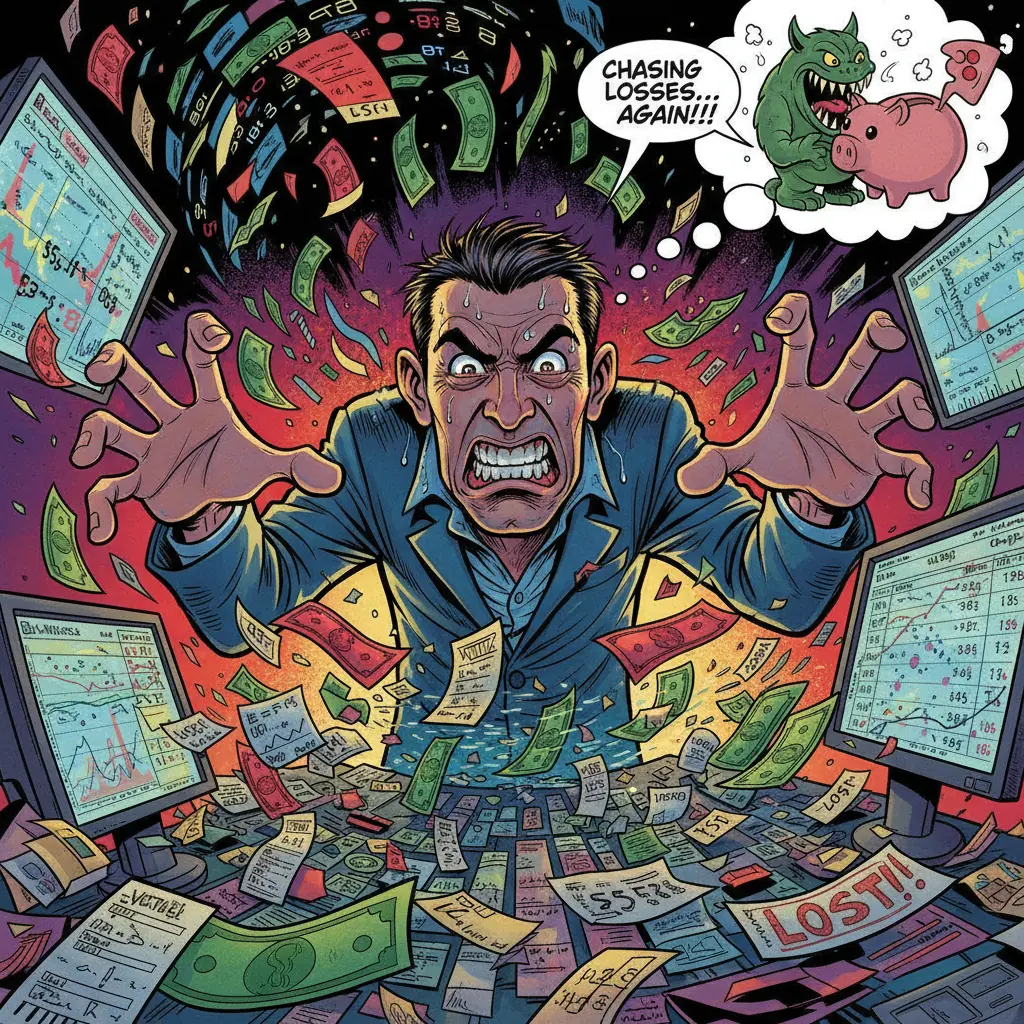
Chasing losses is a gambler’s term for trying to recover lost money by placing increasingly larger or riskier bets. It’s fueled by the sting of defeat and a desperate urge to “get even” quickly. Picture this: you’ve had a bad run of bets on college basketball. Your initial strategy goes out the window. Logic fades. Now, driven by frustration and a growing sense of panic, you throw a significant chunk of your remaining bankroll on a long-shot parlay involving obscure European soccer leagues you know nothing about. The result? Inevitably, another loss, and a deeper hole to climb out of.
This scenario, or variations of it, plays out all too often. Chasing losses is a dangerous trap that can quickly spiral out of control. It transforms a calculated pastime into a high-stakes, emotionally charged roller coaster. The key to avoiding this pitfall is recognizing the signs of emotional betting and implementing strategies for disciplined bankroll management.
Developing emotional control starts with acknowledging that losses are an inevitable part of sports betting. Set clear betting limits before you even place your first bet. Decide how much you’re willing to risk in a day, a week, or a month, and stick to it religiously, regardless of wins or losses. When emotions run high, step away. Take a break, go for a walk, do something completely unrelated to betting to clear your head. Consider journaling about your betting experiences. Writing down your thoughts and feelings can help you identify triggers and patterns of emotional behavior. Remember to seek help if you feel your gambling is becoming a problem. There are resources available to those who need it. Each bet should be treated as an independent event, not as a means to recoup previous losses. Adhering to a pre-determined betting plan is crucial. A sound strategy should dictate your selections and stake sizes, not your emotions.
Recognizing the Signs of Emotional Betting
It is important to be able to detect when emotions are beginning to influence betting decisions. Some common indicators include:
- Betting significantly larger amounts than usual after experiencing a loss.
- Placing bets on unfamiliar sports or markets out of desperation.
- Experiencing heightened anxiety, stress, or irritability related to betting outcomes.
- Neglecting research and analysis in favor of impulsive decisions.
Whenever you notice these signs, it’s time to pause, take a deep breath, and re-evaluate your approach. Remember, disciplined betting is about making rational decisions, not reacting emotionally to the ebb and flow of wins and losses.
Mistake #2: Betting Without Research: Relying on Gut Feelings
In the unpredictable world of sports betting, many fall into the trap of relying on gut feelings or, worse, blind faith in their favorite team. This approach is akin to throwing darts in the dark. Sportsbooks, on the other hand, operate using sophisticated algorithms and statistical models meticulously designed to identify and exploit these very biases. To truly level the playing field and increase your chances of success, embracing sports betting research and rigorous data analysis is crucial.
Ditching team loyalty and lucky numbers is the first step. Instead, dive deep into the wealth of information available. Look at team statistics – not just wins and losses, but detailed metrics like points per game, offensive and defensive efficiency, and shooting percentages. Analyze individual player performance, considering factors like recent form, consistency, and impact on the team. Be aware of injuries, suspensions, and other factors that could affect a player’s contributions. Consider the impact of external factors like weather conditions, which can significantly alter the outcome of games in sports like football and baseball. Examine head-to-head records between teams to identify historical trends and patterns. And don’t overlook coaching strategies; understanding a coach’s tactical approach can provide valuable insights into a team’s potential performance.
Personally, a few data points I always scrutinize are a team’s performance against the spread (ATS), their road/home splits, and their record against teams with winning/losing records. These tell a story beyond the simple win-loss column. All of these factors helps you to place educated bets. Furthermore, a Bet Better Pro subscription uses all the methodology, providing daily access to expertly curated picks that leverage these research-backed strategies.
Identifying Reliable Sources of Information
Not all information sources are created equal. Distinguishing credible sports sources from unreliable ones is essential for informed betting. Credible sources share several key characteristics: objectivity, meaning they present information without bias; data-driven analysis, basing their conclusions on statistical evidence rather than opinions; a proven track record of accuracy; and transparency, clearly outlining their methodology and sources.
Be wary of biased sources like team blogs, social media rumors, and fan forums, which are often driven by emotion rather than facts. When evaluating a source’s credibility, ask yourself: Is the information presented objectively? Are claims supported by data? Does the source have a history of accurate predictions? Is the methodology clearly explained? Answering these questions will help you identify reliable sources and avoid the pitfalls of misinformation, putting you on the path to smarter, more profitable betting.
Mistake #3: Ignoring Bankroll Management: Betting Too Big (or Too Small)
Bankroll management is the cornerstone of any successful betting endeavor. It’s about strategically allocating your funds to withstand inevitable losing streaks while maximizing potential gains over the long haul. Many fall into the trap of wagering haphazardly, either betting too much on perceived “sure things” or so little that victories barely register. This lack of a disciplined approach can quickly deplete your resources, regardless of your initial betting prowess.
A fundamental aspect of bankroll management is the flat-betting approach. This involves consistently risking the same percentage of your bankroll on each play, typically between 1% and 5%. For example, if you have a bankroll of $1,000 and choose a 2% unit size, you would wager $20 on each bet. This methodical strategy provides a crucial safety net. During losing streaks, the impact on your overall bankroll is minimized, preventing emotional decision-making driven by desperation. Conversely, during winning streaks, consistent unit sizes allow you to steadily build your profits, amplifying your return on investment (ROI) without risking a significant portion of your capital.
One of the biggest pitfalls in betting is varying your unit size based on emotions. Increasing your bet size after a win, fueled by overconfidence, or decreasing it after a loss, driven by fear, throws your entire bankroll management strategy out the window. Sticking to a predetermined unit size helps maintain objectivity and prevents impulsive decisions that can lead to substantial losses.
Ultimately, bankroll management involves a trade-off between risk and reward. A more aggressive approach with a higher percentage risked per bet can lead to faster gains, but also exposes you to greater potential losses. A conservative approach with a smaller percentage risked provides more stability and reduces the risk of ruin, but may also result in slower profit growth. Finding the right balance that aligns with your risk tolerance and betting goals is crucial for long-term success.
Calculating Your Optimal Unit Size
Determining your optimal unit size depends on your individual risk tolerance and betting strategy. A practical formula for calculating your unit size is: (Risk Tolerance Percentage) x (Total Bankroll) = Unit Size. Your risk tolerance should be assessed as conservative (1%), moderate (2-3%), or aggressive (4-5%). For example, with a $500 bankroll and a moderate risk tolerance of 3%, your unit size would be $15 per bet. With a $2,000 bankroll and a conservative risk tolerance of 1%, your unit size would be $20. Regardless of your bankroll size or risk tolerance, consistency in unit size is paramount. Sticking to your predetermined amount helps you avoid emotionally driven betting and maintain a disciplined approach.

Mistake #4: Failing to Shop for the Best Lines: Leaving Money on The Table
Line shopping is the unsung hero of profitable sports betting. It’s the simple act of comparing odds across different sportsbooks to find the most favorable numbers for your bets. Think of it as comparison shopping for groceries, but instead of saving a few cents on milk, you’re potentially saving (or making!) significant money on your wagers. Failing to line shop is essentially leaving money on the table, a mistake serious bettors simply can’t afford to make.
Imagine you’re betting on an NFL game where the underdog is +6 at one sportsbook, but only +5.5 at another. If you bet $100 on the +5.5 line and the underdog loses by exactly 6, you lose your bet. However, if you had taken the +6 line, your bet would have been a push, and you’d get your money back. This seemingly small difference of half a point can be the difference between winning and losing, especially over the long run. These little edges accumulate, turning consistent losses into wins, and moderate wins into roaring success.
To effectively line shop, you’ll need accounts at multiple sportsbooks. This sounds like a hassle, but it’s a necessary step. The more sportsbooks you have access to, the more opportunities you’ll have to find those advantageous lines. While offshore sportsbooks can sometimes offer better odds, it’s crucial to do your research and ensure they’re reputable and trustworthy. Look for established books. Even small differences in odds, like moving from -110 to -105, can significantly increase your profitability over time.
Tools and Resources for Comparing Odds
Fortunately, you don’t have to manually check every sportsbook to find the best lines. Odds comparison tools do the heavy lifting for you. A good comparison show real-time odds updates, line movement tracking, and sportsbook ratings. The best platforms make it easy to identify discrepancies and quickly place your bets at the most favorable odds. These kind of tools saves time and increases your chances of finding profitable betting opportunities.
Mistake #5: Overreacting to Recent Trends: Getting Caught in The Hype
Chasing the latest betting trends can feel like chasing a mirage in the desert. Everyone gets excited when a team is riding a hot streak, but that’s often where the value evaporates. Sharp bettors understand that public perception inflates the odds on trendy teams, making them overvalued. This is where the concept of contrarian betting comes in – going against the grain when the data points towards a different outcome. It’s not about being a rebel; it’s about exploiting inflated odds created by hype.
Think of it this way: a team coming off a big win is suddenly the darling of every pundit and casual bettor. The odds shorten, and the potential payout dwindles. But did that one win fundamentally change the team? Probably not. It’s more likely a confluence of factors – a favorable matchup, a lucky bounce, or simply a good day at the office. The key is to look beyond the recent headlines and dig into the underlying data.
I remember once, everyone was jumping on the bandwagon of a team that had won their last five games. They were playing a team with a losing record, and the public money was overwhelmingly on the hot team. But I looked deeper. The “hot” team had been winning close games against weaker opponents, while the underdog had a statistically better offense and a solid defense, even though their record didn’t reflect it. I faded the trendy team, and the underdog pulled off the upset. It wasn’t luck; it was spotting the overreaction and capitalizing on it.
Betting trends aren’t useless; they’re just one piece of the puzzle. They should be viewed with skepticism and combined with a broader, more data-driven approach.
The Importance of Long-Term Perspective
Short-term trends are often misleading because they are based on small sample sizes. A team might win three games in a row, but that doesn’t necessarily mean they’re a suddenly a powerhouse. It takes time for a team’s true ability to manifest itself in the standings. Focus on long-term data – team statistics over the entire season, player performance trends over multiple games, and historical matchups. Remember that teams can have hot steaks but will regress to the average.
Conclusion
Mastering the art of weekend sports betting requires more than just luck; it demands discipline and a keen awareness of common pitfalls. Let’s quickly recap the five mistakes we’ve explored: succumbing to emotional bets, neglecting thorough research, mishandling your bankroll, failing to shop for the best lines, and blindly chasing fleeting trends. Each of these can significantly impact your betting results.
The key takeaway here is that consistent profitability stems from unemotional decision-making, diligent research, responsible bankroll management, and a shrewd understanding of value. Don’t let fleeting emotions dictate your wagers. Dive deep into the stats and team news. Protect your bankroll like the valuable asset it is. Scour different sportsbooks for the most favorable odds. And, resist the urge to jump on every bandwagon—trends can be deceiving.
In the world of sports betting, knowledge is power, and discipline is your shield. Start implementing these strategies today, and you’ll be on your way to becoming a more profitable weekend bettor. Always bet responsibly and within your means.